
 Written by
Saturday, Valpic No. 17 – October 17, 2026 –
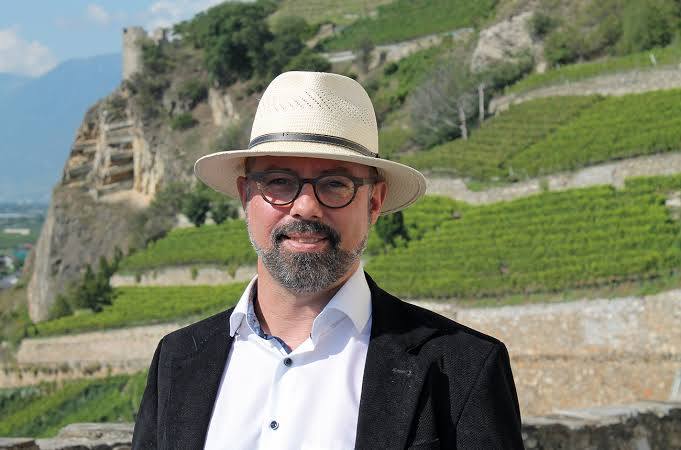
Prof. Dr. José Vouillamoz
Saturday, Valpic No. 17 – October 17, 2026 –
History and Genetics of Valais Grape Varieties –
by Prof. Dr. José Vouillamoz –
Report on Valpic Saturday, October 17, 2026 –
Key Takeaways
José Vouillamoz offers an interpretation of the Valais vineyards that combines archaeology, historical documents, plant observation, DNA analysis, and wine tasting. His analysis shows that grape varieties tell the story of human migration and ancient exchanges, but that their names and the stories associated with them can also obscure their true history.
Genetics makes it possible to identify synonyms, distinguish between grape varieties that are mistakenly grouped together based on their names, and reconstruct family relationships. However, it does not resolve all issues: the parents of several old varieties remain unknown, the direction of a parent-offspring relationship cannot always be determined, and certain conclusions must be revised as methods advance.
The case of Cornalin particularly illustrates thiscomplexity. The Cornalin sold in Valais corresponds to Rouge du Pays, while the Cornalin from the Aosta Valley is known in Valais as Humagne Rouge. These are two distinct grape varieties. José Vouillamoz further notes that the Petit Rouge × Mayolet parentage, which he had published for Rouge du Pays in 2003, was invalidated in 2025. This scientific revision does not change the identity of the grape varieties or the names used for their wines.
The conference also conveys amessage regarding wine policy. José Vouillamoz advocates for greater promotion of heritage grape varieties, particularly Arvine and Rouge du Pays. He believes that the proliferation of varieties and appellations makes the Swiss wine market difficult to understand. He would liketo refocus appellationson a more limited number of grape varieties, while allowing producers to experiment in other categories.
Jean Metz challenges this approach, proposing in particular to highlight Swiss diversity as a commercial asset. The discussion thus reveals atension between a rich heritage, freedom to experiment, and the need for a clearly defined identity.Both speakers agree on the quality of the best Swiss wines and on the difficulty of ensuring that this quality is recognized for its true worth.
The setting of the event and the speaker’s background
Time stamp in the recording: 00:30:50 to 00:39:53.
Jean Metz opens the discussion by linking knowledge of origins to an understanding of the present and to choices for the future. To him, vineyards and wine serve as witnesses to the history and geography of societies.He introduces José Vouillamoz and his work on the origins of grape varieties, highlighting the decisive contribution of DNA analysis.
José Vouillamoz describes himself as an ampelologist—a specialist in the study of grapevines—whose work focuses on their genetics. He explains that he initially worked on other plants during his doctoral research before combining this scientific expertise with his interest in wine. In 2001, a fellowship allowed him to join the University of California, Davis, to train in the genetic analysis of grapevines, using samples of Swiss and Valais grape varieties.
He notes thatthe international book listing 1,368 grape varieties, mentioned by the host, is a collaborative work produced with Jancis Robinson and Julia Harding. He also presents his publications on Swiss grape varieties and the great grape varieties of French origin, as well as a collaborative work on the history of viticulture and wine in Valais to which he contributed.
The tasting will accompany the presentation. Nine wines from Cave La Romaine are on the program, including the welcome Fendant: Chasselas, Sylvaner, Humagne Blanche, Arvine, Savagnin Blanc, Pinot Noir, Humagne Rouge, Rouge du Pays, and Syrah.
The main presentation ends around 02:25:30; the Q&A session continues until around 03:01:06. The timestamps below correspond to the recording’s timer.
A history of winemaking dating back to before the Roman presence
Time stamp in the recording: 00:39:53 to 00:47:00.
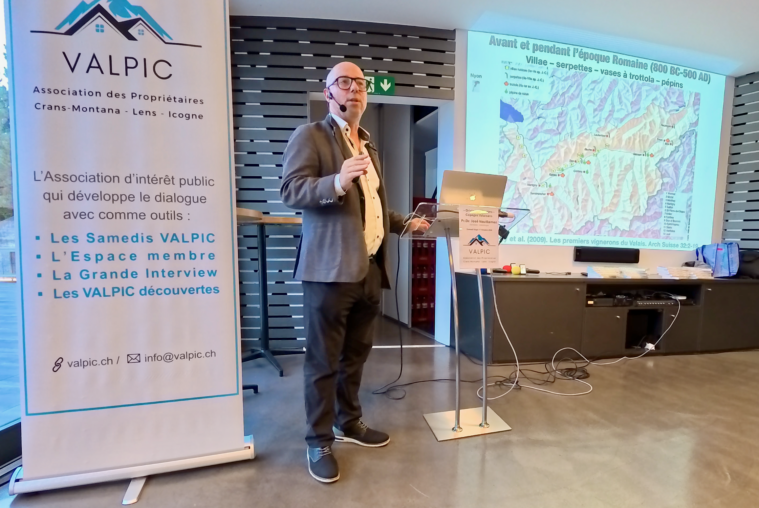
José Vouillamoz notes themajor role the Romansplayed in spreading viticulture, but emphasizes that vines were present in Valais before their arrival. He cites the excavations at Gamsen, near Brig, whereremains of a Celtic settlementyielded grape seeds, stems, and vine shoots. The combination of these elements is presented as evidence of local cultivation, beyond the mere consumption of grapes.
He supplements this approach with palynology—that is, the study of pollen preserved in sediments. Samples from Lake Montorge make it possible to track changes in vegetation over a long period of time. According to his interpretation of the diagram presented, the increase in grapevine pollen around the 7th and 6th centuries BCE supportsthe hypothesis of cultivation predating the Roman era.
The speaker distinguishes this hypothesis from the possible presence of wild grapevines, which still exist in certain populations in Valais. The appearance or increase in pollen at a given time is evidence of cultivation, but does not equate to the identification of a specific grape variety.
Containers associated with wine and pruning tools round out the archaeological evidence. José Vouillamoz points out that the presence of wine in a vessel does not always indicate whether it was produced locally or imported. He also notes the absence of any identified ancient wine-making cellars in the examples presented and suggests the possibility of wooden structures that may have since disappeared.
Written history then takes over. A document from 1052 mentioning the Château de Saillon and two neighboring vineyards particularly interests him, since he is originally from Saillon. He sees this as a concrete illustration of thecontinuity of viticulture: some plots still cultivated today have been under cultivation for nearly a millennium, though this does not necessarily mean that the same grape varieties have been maintained there.
What DNA analysis can reveal
Timestamps in the recording: 00:43:28 to 00:46:56, with further details as the tasting progresses.
José Vouillamoz distinguishes between the analysis of modern plants and that of archaeological material. He recounts that in 2003, he attempted to extract DNA from ancient seeds fromArmenia. Their charred condition made it impossible to obtain enough information for a conclusive identification, despite precautions taken to prevent contamination.
He then presented French studies published in 2019 that successfully analyzed seeds preserved in a humid environment. This research revealed links to modern grape varieties. The most striking example in the presentation is that of amedieval seed discovered in Orléans, identified asSavagnin blanc. José Vouillamoz concludes that this grape variety has a proven history dating back at leastnine centuries.
Genealogies are based onsexual reproduction: a new grape variety can arise from a seed resulting from the union of pollen and pistil. Its two parents can be identified when their profiles are available and the data allow for a conclusion. When the parents have disappeared or have not yet been identified, the speaker refers to the grape variety as an “orphan” variety.
He distinguishes this emergence from amutationin an existing vine. A change in color or aroma may appear on a part of a vine and be preserved through vegetative propagation. This distinction is particularly important for Pinot and Savagnin: a variant resulting from a mutation does not share the same relationship as a offspring resulting from a cross.
The method combines genetic data with written records, geography, and the diversity of observed forms. A name resembling that of a city, a legend about its origin, or the first documented mention—taken in isolation—is not sufficient to prove the place of origin of a grape variety.
Swiss Diversity and the Role of Heritage Grape Varieties
Time stamp in the recording: 00:47:00 to 00:59:49.
José Vouillamoz reports that he identified 252 grape varieties grown in Switzerland for his 2017 edition, compared to320 forthe 2025 edition. He considers this increase excessive given the available acreage and commercial clarity. According to the figures he presents, 213 grape varieties are recognized under appellation designations in the various cantons.
He proposes a classification that distinguishes between non-native grape varieties introduced after 1900, traditional grape varieties present before that date, and indigenous grape varieties originating in Switzerland. Among the latter, he distinguishes between heritage varieties that arose spontaneously and crosses and hybrids created by humans. He identifies31 heritage grape varieties, to which he pays particular attention.
Phylloxeramarked a major turning point in history. The speaker explains that the fight against this root-destroying insect led to grafting onto resistant rootstocks and a profound reorganization of the vineyards. The modernization of vineyards and the arrival of the railroad also contributed to changes in vineyard acreage and the spread of grape varieties from other regions.
According to his calculations, heritage grape varieties other thanChasselasaccount for about 5.5% of Switzerland’s vineyard area. He considers their share to be insufficient. In Valais, the share of indigenous grape varieties is higher, but they remain in the minority compared to the traditional varieties that were introduced. The gap between the high profile of certain specialties and their limited actual acreage fuels his advocacy.
The speaker also discusses the decline in the size of the Valais vineyards since 1991, a year he associates with the introduction of AOCs and greater availability of statistics. He cites a decrease from more than 5,200 hectares to approximately4,600 hectares in 2023, followed by a further decline. Some figures regarding area are inconsistent or clearly confused between Switzerland and Valais in the transcript; they do not allow for the reconstruction of a comprehensive and reliable statistical overview.
Finally, his criticism focuses on the 55 grape varieties listed under the Valais AOC. He believes that an appellation loses its significance if it includes nearly all newly introduced varieties, while certain rare, historic varieties remain excluded. He asserts that he could reduce this list toabout a dozen grape varieties. He is not calling for a ban on other plantings, but rather for their marketing category to be distinguished.
Chasselas and Fendant
Time stamp in the recording: 00:59:49 to 01:09:25.
The first wine is used to explain the difference between the name of a grape variety and a regional appellation. Chasselas is known as Fendant in Valais and as Gutedel in German-speaking Switzerland. The word “Fendant” historically refers to berries that split open when pinched, as opposed to the so-called “giclet” varieties, whose berries burst.
José Vouillamoz qualifies the notion that only split-cluster varieties are suitable for wine, while the others are suited for table grapes. In his view, this distinction is too rigid, and diversity in shape can contribute to quality. He also points out that the internal diversity of a grape variety is reflected in differences in clusters, ripening time, and foliage among clones.
He dismisses accounts that trace the origins of Chasselas to Egypt or Constantinople. His analyses and historical research lead him to proposethe Lake Geneva region, in the broadest sense, as its birthplace. He cites regional genetic affinities, ancient names—including “Lausannois”—and the rich clonal diversity observed around Lake Geneva. Its parents remain unknown.
The widespread introduction of Fendant in Valais is illustrated by an order for 50,000 grapevines placed with the canton of Vaud in 1849, intended for a vineyard at La Planta d’en Bas in Sion. The people of Vaud primarily distinguished their wines by place names; the people of Valais emphasized the name of the grape. The speaker then recalled the granting of exclusive use of the name “Fendant” to Valais in 1966, humorously noting the Vaud origin of the term.
On the palate, it is a delicate wine, not overly expressive aromatically, and one that clearly reveals the differences in terroir. It evokeswet stone, warm slate, and chamomile, with a refined mouthfeel and naturally moderate acidity. He emphasizes its social role in gatherings and life’s important moments.
In his view, the aging potential of Chasselas contradicts a overly simplistic interpretation of the idea that high acidity is essential for aging. He reports having tasted remarkablewines that are several decades old, though he does not generalize this ability to all bottles.
Sylvaner and the name Johannisberg
Time stamp in the recording: 01:09:25 to 01:16:40.
José Vouillamoz traces the origins of Sylvaner to Austria. He highlights its natural kinship with Savagnin Blanc and Österreichisch Weiss, two grape varieties found in that region. He cites 1869 as the year Sylvaner was introduced to Valais, though he does not claim to know all the details of its arrival.
The history of the name Johannisberg is unique. Riesling vines from Schloss Johannisberg in the Rheingau are said to have first been introduced to Valais in the 19th century and given this name. The Sylvaner, known locally as Rhin, subsequently became more widespread. In the 1920s, the name Johannisberg was transferred to the Sylvaner.
The speaker notes Henri Wuilloud’s opposition to this change. He draws a conclusion from this that is relevant to interpreting old wine labels: a Johannisberg from the late 19th century does not necessarily refer to the grape variety that this name denotes today in Valais. The chronology must therefore accompany the interpretation of the names.
The wine tasted is described asfuller-bodied, richer, and more voluminousthan Chasselas, withnotes of hazelnut that can develop into roasted hazelnut.A discussion with Jean Metz focuses on the wine’s legs and their relationship to the alcohol content. The participants mention glycerol and acknowledge that there is some controversy surrounding it; the session does not resolve this issue through a technical demonstration.
White Humagne and Traces of an Ancient Migration
Time stamp in the recording: 01:16:40 to 01:23:21.
Humagne Blanche, also known as Humagne Blanc, is described as an ancient, rare, and gourmet grape variety. José Vouillamoz comments on a document from 1313 that mentions three grape varieties. He identifies Humagne and Rèze by cross-referencing with other sources, but refuses to definitively attribute the third name, Neyrun, to a modern grape variety.
This reservation raises a methodological issue: the age of a word does not automatically allow it to be associated with a variety known today. He will return to this point regarding Neyrun and the “Rouge du Pays,” maintaining that its identification remains uncertain.
DNA analysis has identified the Humagne Blanche variety at the Miousat vineyard in southwestern France. An initial hypothesis suggested that the variety had been brought from Valais to France. José Vouillamoz explains that he subsequently favored the opposite scenario, since the grape variety is relatively isolated morphologically and genetically in Valais, whereas it shows greater affinities in southern France.
He cites the Colombaud of Provence as one of his identified ancestors; the other remains unknown. According to him, genetic and geographical evidence supports the theory of an ancient migration up the Rhône Valley. The proposed Greek etymology of its name remains a complementary hypothesis, not independent evidence of this route.
Humagne Blanche also appears among the rare grape varieties of Upper Valais. The speaker specifically mentions Lafnetscha, which is a cross with Completer, as well as Himbertscha. These connections illustrate how an ancient grape variety has contributed to local diversity.
In the glass, it displays arefined and understated character, not overly exuberant, with freshness and a slightly tannic texture. Aging can add more texture and notes of pine resin.He regrets that this delicacy attracts less attention from the general public than more aromatic wines and encourages people to discover this variety.
Arvine and Petite Arvine
Time stamp in the recording: 01:23:45 to 01:30:21.
José Vouillamoz points out that “Arvine” and “Petite Arvine” refer to the same grape variety. The term “Petite” came into use after the distinction was made between “Grosse Arvine”—first mentioned in the early 19th century—which has larger berries. Grosse Arvine is distinct from Arvine, whereas Petite Arvine remains a synonym for Arvine.
The origins of the Arvine remain unknown.The speaker mentions a network of relationships with other rare varieties, but does not present a fully established lineage. He also revisits the stories of its Aosta Valley origins: according to him, the introduction of Arvine to the Aosta Valley is much more recent than the legends that trace it back to the Romans. He cites the efforts of Canon Joseph Vaudan and the year 1970.
For him, Arvine symbolizes therevivalof Valais specialties beginning in the 1990s. He notes a sharp increase in the area under cultivation since the approximately 39 hectares reported for 1991, while hoping for even greater growth. He would like to see a diverse range of Arvine wines, from affordable wines to premium vintages, mirroring the range of quality found with Pinot in Burgundy.
The tasting notes highlightrhubarb, grapefruit, and a lemony finish. The grape variety is described asexpressive, with body, richness, and pronounced acidity. José Vouillamoz, however, remains cautious about the long-term aging potential of dry Arvine wines and makes a distinction for very old wines with residual sugar, some of which have left him with exceptional memories.
Jean Metz suggests that aging causes the varietal character to fade, giving way to the terroir. José Vouillamoz disagrees: he attributes the convergence of old wines instead to the development of tertiary aromas. In his view, the disappearance of varietal aromas does not prove a return to the terroir. This difference in interpretation remains explicitly open.
The white Savagnin, known as Heida and Païen
Time stamp in the recording: 01:30:21 to 01:39:08.
White Savagnin, known as Heida in Upper Valais and Païen in French, is described as a traditional Valais grape variety of foreign origin. José Vouillamoz places its probable origin between northeastern France and southwestern Germany. He cites 1586 as the first mention of it in Valais and points to genetic evidence of its existence for at least nine centuries.
He explains the name “Heida” as referring to great antiquity. The translation “Pagan” refers to the idea of a time before evangelization. He also highlights Visperterminen’s role in this history, while challenging the often-claimed title of “Europe’s highest vineyard”: he distinguishes between the actual elevation measured and that reported in certain sources, and cites higher-altitude vineyards in the Aosta Valley.
Savagnin has a wide range of descendants. The speaker specifically mentions Chenin Blanc, Sauvignon Blanc, Trousseau, Petit Manseng, Grüner Veltliner, and Sylvaner. Its long history and widespread distribution have created numerous opportunities for crossbreeding, which explains its presence in several European genealogies.
When asked by Jean Metz about Savagnin rose and Gewürztraminer, José Vouillamoz distinguishes between mutation and kinship. Pink Savagnin is a color mutation of white Savagnin; Gewurztraminer adds an aromatic mutation. He therefore refuses to use the word “family” in the same sense as it is used for a group of parents and children resulting from crossbreeding.
On the palate,Heidais described asintense and heady, with ripe fruit, mirabelle plum, and floral notes. The palate is full-bodied, rich, and supported by high acidity.José Vouillamoz notes that Heida can have higher acidity than Arvine and acknowledges its promising aging potential.
A question about winemaking on small plots prompts him to point out that microvinification is possible. The small size of a plot, therefore, does not in and of itself prevent the production of a distinct cuvée; rather, it raises questions primarily about available volume, labor, and marketing.
Pinot Noir and Color Mutations
Time stamp in the recording: 01:39:08 to 01:47:17.
Pinot Noir is described as a grape variety native to northeastern France that has become a traditional variety in Switzerland. José Vouillamoz discusses itsintroduction to Valais in the mid-19th century, notably through an order for red Cortaillod vines from Neuchâtel, which coincided with the introduction of Fendant from Vaud.
He revisits the distinction between a grape variety and its mutations as they pertain to Pinot Noir, Pinot Gris, and Pinot Blanc. From a genetic perspective, these are forms of the same ancient grape variety that have accumulated changes over time, rather than a family resulting from crossbreeding. Images of grape clusters or berries displaying multiple colors are used to illustrate this concept.
The location of the mutation explains its extent: it can affect a single berry, a cluster, or an entire vine shoot. If the vine shoot exhibiting the new trait is propagated, that trait can be preserved. This is how he explains the establishment of varieties such as Pinot Blanc.
Pinot is also part of a vast network of genetic relationships with other European grape varieties. José Vouillamoz demonstrates how the trees he had prepared separately for several French varieties could be linked to one another. This genetic continuity contradicts accounts that systematically attribute a distant and independent origin to each grape variety.
The Pinot tasted, from theCastel d’Uvrier region, is described as having particularly pronouncednotes of smoke, soot, and warm earth, with a denser structure than one might expect in some very fruity Pinots. The speaker attributes this character to the terroir and discusses thepresence of active limestonewith representatives from the winery.This is a tasting note and an interpretation of the terroir, not a causal demonstration presented during the session.
Humagne Rouge and Cornalin from Valais: Two Distinct Grape Varieties
Time stamp in the recording: 01:47:17 to 02:03:27.
José Vouillamoz describes this section as the most challenging due tooverlapping names. The key point to remember is this: in Valais, “Humagne rouge” refers to the grape variety known as “Cornalin” in the Aosta Valley; also in Valais, “Cornalin” refers to “Rouge du Pays,” also known as “Landroter” in Upper Valais.
These two grape varieties therefore produce different wines. Nor is Humagne Rouge simply a red version of Humagne Blanche: the speaker points out that they are not genetically related. He suggests that their vigorous growth may have contributed to the similarity in their names.
The timeline helps explain the confusion. The Cornalin from the Aosta Valley is described in a book from 1838. The name “Rouge du Pays” appears in sources from the Valais region dating from 1878 onward. Cornalin from the Aosta Valley is believed to have been introduced to Valais around 1900 under the name “Humagne rouge.” In 1972, Jean Nicollier proposed renaming “Rouge du Pays” to “Cornalin,” to give this challenging grape variety a name considered more appealing.
José Vouillamoz criticizes this change in nomenclature. He recommends using the oldest valid name to distinguish between the varieties: Rouge du Pays on one hand, and Cornalin on the other. He acknowledges, however, that the name “Cornalin valaisan” is now firmly established through common usage and marketing efforts. He notes that producers use “Rouge du Pays,” “Cornalin,” or both on their labels.
There has been a significant update regarding the lineage. The speaker explains that his 2003 classification—which identified the Petit Rouge and the Mayolet as the two parent varieties of the Rouge du Pays—no longer stands up to the scientific knowledge available in 2025, particularly in light of research into color inheritance. He presents this correction as a normal evolution of science, even though it calls into question a conclusion he had long promoted.
The parents of Rouge du Pays are therefore once again considered unknownin the report. First-degree links remain with several Aosta Valley grape varieties, including Cornalin, which corresponds to Humagne Rouge. José Vouillamoz points out that when the second parent and the age of the varieties are unknown, the exact direction of the link may remain uncertain. The oral commentary on the diagram also uses terminology related to descent; it is therefore important to note the genetic relationship without attempting to reconstruct a genealogy more precise than the one actually established.
A former president of the Maison du Cornalin asks whether this revision requires a change in names. José Vouillamoz clearly states that it does not: only the previously proposed connection is being called into question. He places these connections in the broader context of the history of exchanges between Valais and the Aosta Valley, via the Great St. Bernard Pass and the transalpine routes.
On the palate,Humagne Rouge is characterized by notes of dried vine leaves, smoke, and wood, rather than by a strongly fruity profile. José Vouillamoz notes that it has a relatively delicate texture, while retaining a rustic, full-bodied character that pairs particularly well with game dishes.
The Goron of Bovernier and the Production of Rouge du Pays
Time stamp in the recording: 02:03:27 to 02:12:57.
A question about Goron provides another example of a name shift. José Vouillamoz distinguishes between Goron de Bovernier—an old grape variety—and Goron as the name of a wine. He explains that the name of the grape variety was adopted in 1958 to designate wines from a very abundant harvest that producers did not wish to market under the “Dôle” appellation.
He mentions the replanting of the authentic Goron de Bovernier in his town, on his advice, and the very tannic and rustic character of the first vintage he tasted. Preserving a grape variety does not, therefore, automatically guarantee a wine that is easy to enjoy: it may require relearning how to grow and vinify it.
Le Rouge du Pays, known in Valais asCornalin, is then described as a demanding variety. José Vouillamoz mentions fluctuating yields, susceptibility to magnesium deficiency, and difficulties in achieving uniform ripening. Selecting vines with less variable yields has helped reduce some of these problems, though they have not been entirely eliminated.
He describes the meticulous work carried out at Cave La Romaine by Joël Briguet and his team, particularly the removal of parts of the clusters that are ripening less well. According to him, leaving underripe berries in the wine can introduce acidity, coarseness, and astringent notes that detract from the desired finesse.
The host asks why this grape variety produces uneven yields and why certain ends of the clusters ripen less well. José Vouillamoz acknowledges that he does not have a complete answer regarding alternate bearing. He offers an explanation related to the nutrient supply to different parts of the cluster as they ripen, though he does not present it as a detailed study conducted during the session.
The wine is described as offeringripe black cherries, great fruit purity, floral notes, and silky tannins.The speaker emphasizes the effort required to achieve this texture. For his part, the host reports on a particularly successful tasting of a 2022 reserve vintage from Cave La Romaine. The discussion thus links the grape variety’s potential to the demanding work required in the vineyard and during aging.
Syrah and Its Roots in the Rhône Valley
Time stamp in the recording: 02:13:33 to 02:25:30.
The Syrah concludes the tasting. José Vouillamoz dismisses the legends claiming it originated in Shiraz, Persia, or Syracuse. He points out that the similarity between names does not constitute proof of origin and presents the genetic results identifying its parents: Dureza, a red grape variety from Ardèche, and Mondeuse Blanche from Savoie.
He traces their origin to the Isère region, thereby linking Syrah to its Rhône origins. He points out that the white Mondeuse is not simply a white mutation of the black Mondeuse. This example reinforces the conference’s overarching lesson about the pitfalls of names and similarities.
The introduction of Syrah to Valais is attributed to Henri Wuilloud in 1921, following a trip to Tain-l’Hermitage. The vines were planted at the Grand Brûlé estate in Leytron. José Vouillamoz says he had planned events for the centennial in 2021 but postponed them due to the health crisis, instead aligning them with the centennial of the first harvest, which will be celebrated in 2025.
He believes that Syrah is particularly well-suited to the Valais. He even asserts that if one were to choose a French red grape variety to introduce today based on local conditions, Syrah would seem more logical to him than Pinot. However, he does not deny the place Pinot has earned in the regional tradition.
A blind tasting comparison, described by the speaker, serves to illustrate the level achieved by Valais Syrahs when compared to prestigious international wines. He highlights the contrast between the recognized quality and the relatively modest prices of certain Swiss vintages. The prices mentioned are examples provided by the speaker and do not constitute an up-to-date price comparison.
The wine tasted is described as havingred fruit flavors, particularly cherry, and peppery notes. José Vouillamoz mentions rotundone (a natural aromatic compound—a sesquiterpene—responsible for the characteristic aroma of black pepper and spices in wine—editor’s note)in connection with this spicy character. He highlights the wine’s density and power on the palate, combined with fine tannins. He uses the image of sandpaper to explain the tactile quality of the tannins: a very fine grain smooths out the sensation, as opposed to a coarse, aggressive texture.
The mention of Syrah vineyards further north, such as those in Alsace, raises the issue of climate. The speaker interprets these as experimental efforts, without claiming that their success is already assured. He concludes his main presentation with an enthusiastic endorsement of Swiss wines.
Discussions on winemaking and wine styles
Time stamp in the recording: 02:25:54 to 02:38:06.
The discussion first turns tonames. José Vouillamoz distinguishes between the legitimate use of grape variety names and the transfer of a name that could createconfusion regarding identity. The case of Cornalin is cited as a potential source of dispute, not as a proceeding that has been announced or initiated.
When asked about a single ancestral grape variety, the speaker replied that none is known and that the domestication of the grapevine may have occurred in several places. He mentioned Georgia and southeastern Anatolia. He also explains that the shift to white grapes is linked to color mutations that were subsequently preserved.
Armenia and the Areni grape variety are mentioned in connection with Mount Ararat. José Vouillamoz distinguishes Armenian vineyards from the symbolic narratives associated with the mountain and expresses his interest in Areni. He also describes forms of mixed farming in which vines climb trees, which he observed during his travels.
A question about oxidative Savagnin leads to a discussion of wines with a yeast film. The speaker explains the principle of a container that is not regularly topped off to compensate for evaporation, leading to the formation of a yeast veil on the surface. He draws parallels between this practice and traditions in the Jura, Jerez, and elsewhere, particularly in Sardinia.
He links certain nutty notes to sotolon(an aromatic marker of “vin sous voile” wines—Ed.) andpoints out that these aromas stem from the winemaking process, not solely from the grape variety. Savagnin is associated with Jura “vin jaune,” while the wine from the Valais Glacier has historically been linked to Rèze. He is surprised that Heida has not been used more extensively locally to explore this type of winemaking.
Finally, a brief discussion touches on the historical uses of wine mixed with water. This is part of the discussion on ancient practices and does not constitute a health recommendation or a method for making water safe to drink.
What Does the Future Hold for Grape Varieties and Appellations?
Time stamp in the recording: 02:38:06 to 02:46:26.
When asked about the choices to be made in the face of competition, climate change, and declining consumption, José Vouillamoz reiterates his proposal for arefocusing. He wants to highlight amore limited selection of signature grape varieties, while retaining certain traditional ones that have become important, such as Pinot.
He proposes distinguishing between a more stringent designation and a category that allows for greater flexibility, citing theEuropean AOP and IGP models. From this perspective, grape varieties such as Chardonnay could continue to be produced without forming the core of the identity being promoted. This proposal reflects his personal position; no reforms were decided upon during the meeting.
He also criticizes competition that is too focused on the neighbor. He believes it is counterproductive to plant a particular variety solely to produce a wine that the neighboring winery does not offer. He calls for prioritizing Swiss wines and their regional identities, and thenhighlighting what producers do particularly well and what truly sets them apart.
A question about Gamaret and other varieties led to a clarification of terminology. José Vouillamoz pointed out that a cross within the Vitis vinifera species should not be confused with an interspecific hybrid. He explains that several Swiss varieties were initially developed to improve the color, structure, and resistance to rot in wines that were then being produced from high yields.
He personally has reservations about some of these single-varietal wines, as their original purpose was specifically to be blended. The host qualifies this assessment by citing a Diolinoir from Cave La Romaine, which he considers very successful. The preferences expressed are thus distinguished from the historical explanation of the role of these crossbreeds.
Jean Metz proposes using Swiss diversity as a selling point: a sort of living showcase where visitors can sample wines made from numerous grape varieties. José Vouillamoz acknowledges the unusual scope of this commercially available diversity, but distinguishes this idea from existing conservation collections, such as Vassal in France. He maintains his preference for amore straightforward selection.
The Costs, Public Awareness, and Climate Change
Time stamp in the recording: 02:46:26 to 02:55:59.
José Vouillamoz attributes the high cost of production in Switzerland to manual labor, the steep slopes, and the difficulties of mechanization. He compares the order of magnitude of labor hours in the Clavau vineyards with those in more mechanized regions. The debate thus focuses on production conditions rather than on a simple comparison of bottle prices.
The speaker believes that Swiss producers cannot compete with large, mechanized wine-growing regions in the entry-level segment. However, he believes that their best wines offer excellent value for money compared to much more expensive foreign wines. He therefore wishesto place particular emphasis on the mid-range and high-end segments.
Climate change is discussed with caution. José Vouillamoz notes that grape varieties that previously had difficulty ripening—notably Humagne Rouge and Syrah—are initially benefiting from more favorable conditions. However, he refuses to treat this current advantage as a long-term guarantee: how things evolve will depend on the extent of global warming.
He also mentions the possibility of moving some vineyards to higher altitudes. This option is not unlimited, however, because the vineyards would then compete with other land uses. In his view, altitude contributes to the alpine character of certain wines, which is marked by freshness and acidity.
On brand awareness, he describes the efforts made to promote Swiss wines abroad and, in turn, generate greater interest in Switzerland. Some participants point out how difficult it is to understand the range of offerings when there are so many producers, vineyards, grape varieties, and appellations.
José Vouillamoz deliberately uses a provocative statement: Swiss wine does not exist as a single, immediately identifiable style. He is obviously not denying that Swiss wine is produced; rather, he emphasizes the lack of a common profile among a Merlot from Ticino, a Syrah from Valais, and other regional wines.This diversity is a source of richness, but it complicates the overall message.
Wine aging and the fragmentation of plots
Time stamp in the recording: 02:55:59 to 03:01:06.
On the subject of aging, José Vouillamoz points out that it is difficult to generalize about all of Switzerland. In his experience,very old whitewines have more often evoked strong emotions in him than reds. He specifically mentions a 1989Completerhe tasted recently, which he describes as remarkably fresh and well-rounded.
He challenges the notion that a Swiss white wine must necessarily be drunk in its early years. He introduces the association Mémoire des Vins Suisses, founded in 2002, which preserves bottles from selected producers and organizes tastings of different vintages to demonstrate how they evolve. Cave La Romaineis mentionedtherealong with its red Humagne.
This approach does not guarantee that all wines have the same aging potential: it focuses on a rigorous selection process and specific vintages. It does, however, allow us to document the aging process rather than relying on general assumptions.
The final section discussesland fragmentation. José Vouillamoz does not provide a specific average size, but he highlights the difficulty of consolidating plots, producing consistent yields, and communicating about very small units.
He cites a vineyard block assembled with the help of Joël Briguet and partners: according to his account, it took 33 deeds of purchase to assemble approximately 2.5 hectares. This example illustrates the considerable effort involved in creating a cohesive block within a fragmented vineyard.
The Scope of the Conference
This study shows thatValais’s winemaking identity has been shaped by local traditions, new introductions, transalpine exchanges, and human choices. A traditional grape variety did not necessarily originate in Valais; conversely, a heritage grape variety may still account for only a very small proportion of plantings.
The main scientific contribution is the distinction between name, genetic identity, kinship, and mutation. The cases of Fendant, Johannisberg, the two Cornalins, Pinot, and Savagnin demonstrate why these categories should not be confused. The correction regarding the parentage of Rouge du Pays also serves as a reminder that knowledge evolves and that acknowledging uncertainty is part of scientific work.
Wine tasting connects this knowledge to specific wines. It highlights the diversity of expressions, the role of vineyard management, and the differences in texture, aromas, and aging potential. The opinions expressed are those of the presenter and the participants regarding the wines presented.
Finally, the strategic debate remains open between refocusing on a few signature grape varieties and promoting the commercial value of great diversity. José Vouillamoz favors clarity in appellations and traditional specialties; the richness of the selection can also be seen as an asset. They agree on the need to raise awareness of the quality of Swiss wines and the demanding conditions under which they are produced.
The conference concluded to thunderous applause, marking one of the most memorable Valpic Saturdays of 2026, celebrating the lands of our estates, lands steeped in history and excellence, highlighted by Professor José Vouillamoz, Ph.D., who is recognized worldwide as the leading authority on ampelology.
Speaker: Prof. Dr. José Vouillamoz
Host: Jean Metz
To order all of Dr. José Vouillamoz’s books, follow the link to his website:
ãValpic – October 2026