
 Written by
Saturday, Valpic No. 15 – August 8, 2026 –
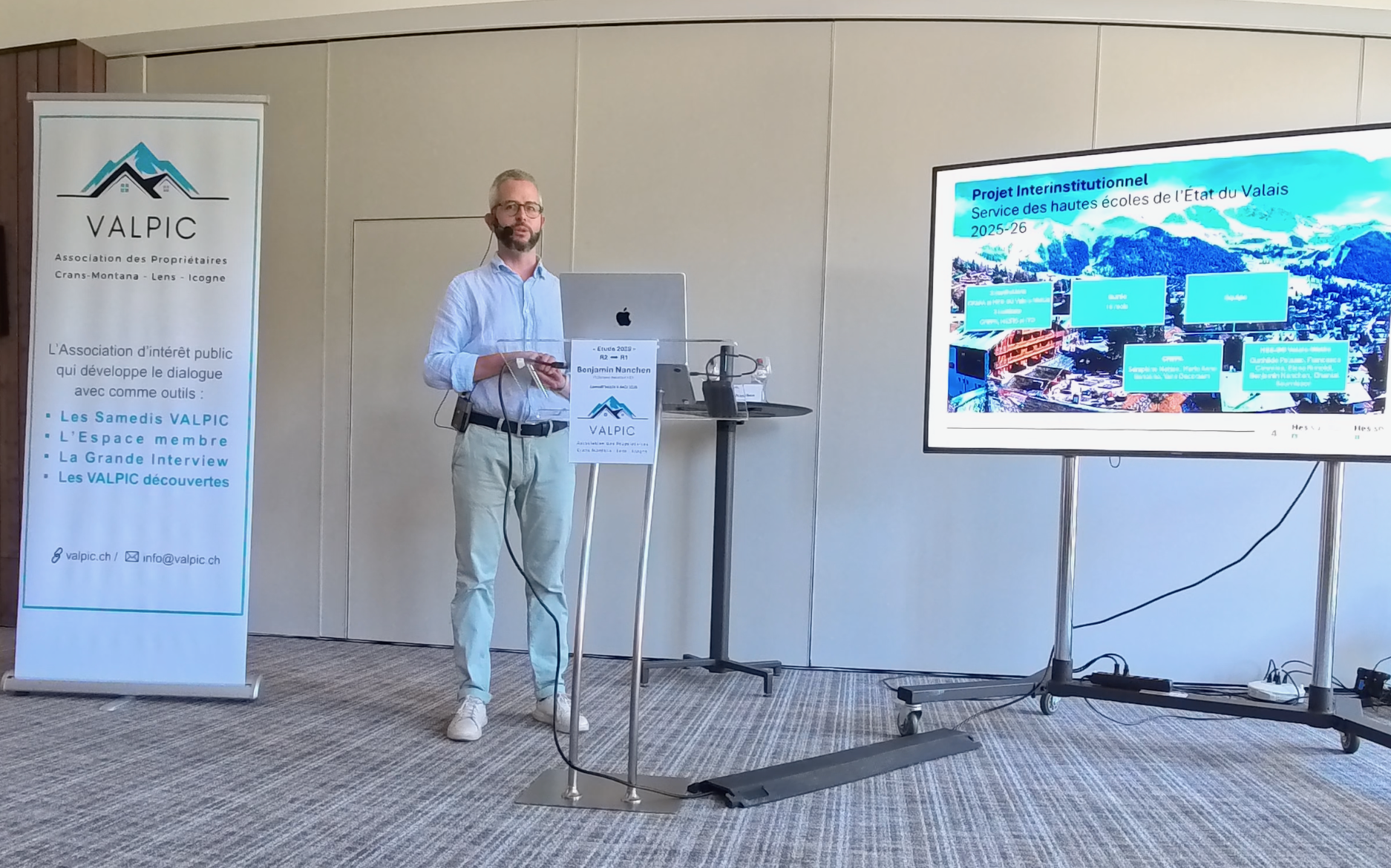
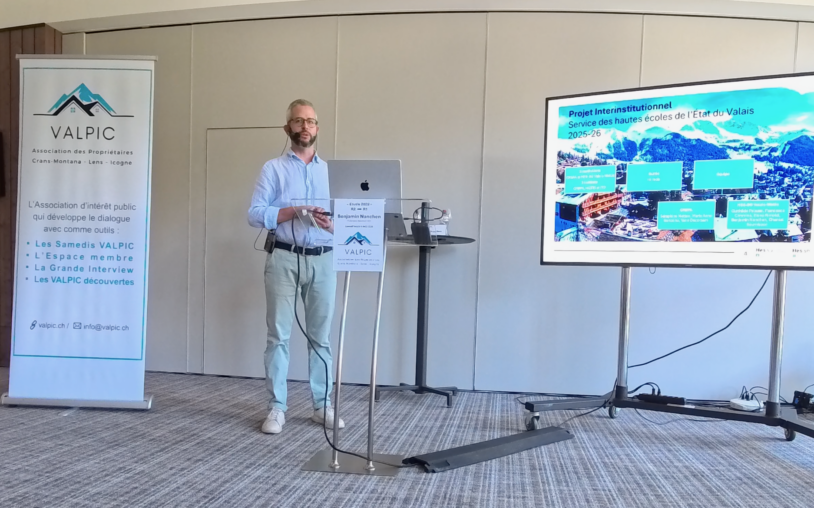
Prof. Benjamin Nanchen
Saturday, Valpic No. 15 – August 4, 2026 –
Summary of the HES-SOValais-Wallisand Crepa 2026 Study: “Experiencing Mountain Areas: Between Primary and Secondary Residences”
The study analyzes the coexistence of permanent residents, newcomers, and second-home owners in the mountainous regions of Valais.
Key Conclusion
Co-presence is generally viewed positively, but it is not enough to create a true community.Tensions centeronaccess to housing and resources, recognition as a “resident,” participation in decision-making, and the difficulty of joining local networks.
The study suggests thattensions could ease if the various groups met, exchanged ideas, and participated together in local life.
Methodology
The survey combines:
- 26 semi-structured interviews with older adults with an average age of 67, conducted in the CREPA region, the Val d’Hérens, and the municipalities of Crans-Montana, Icogne, and Lens;
- 1,685 responses to a survey distributed throughout Valais by municipalities, tourist offices, and homeowners’ associations.
Of the 1,610 people who reported their residential status, 39% live in their primary residence, 48% own a second home but are registered as residents outside the Valais, and 13% own a second home and have their primary residence in the Valais.
Key Takeaways
1. People are drawn to the mountains first and foremost for the quality of life they offer.
More than 93% of the three groups cited the beauty of nature and the mountain environment. Second-home owners outside Valais particularly value sports activities (92.4%) and the climate (93.6%). Primary residents are more closely tied to family heritage (89.9%), safety, friends, and the Valais identity.
2. Expectations vary depending on residential status.
Permanent residents primarily call for improvements in health care (36.1%), public transportation (33%), and social life (28.7%). Secondary residents place greater emphasis on municipal investments and transportation. The most frequently mentioned issues are individualism, traffic, health, transportation, and parking.
3. Aging is a key issue.
For all groups, health status is the leading reason likely to prompt a move (45 to 50 percent). Permanent residents are also more concerned about access to healthcare, nursing homes, the cost of living, and work-related factors.
4. A sense of attachment exists, but a sense of belonging remains uneven.
Permanent residents feel more attached to the town (82% agree) and “at home” (88%) than second-home owners, at 70% and 66%, respectively. The welcome provided by municipal authorities is also rated more highly by primary residents: 71% say they feel welcome, compared to 35% of secondary residents.
Integration requires the acquisition of “local capital”: length of residence, local roots, involvement in community organizations, knowledge of local customs, and participation in community life. This process takes time and resources. The right to vote in local elections remains an important symbolic barrier.
5. Coexistence is generally good, despite some mistrust.
About 76% feel that relations with primary residents are going well, and 72% feel the same way about relations with secondary residents. However, 42% perceive a certain degree of mistrust between the groups.
In addition, 67% believe that permanent residents should have a greater say in local decision-making.
6. Second homes are viewed as useful but controversial.
Nearly 69% of respondents consider them necessary for community development, even though they cause some inconveniences. Perceptions of the pressure they place on housing and infrastructure depend heavily on one’s status: a much larger proportion of primary residents believe that second homes take up resources at their expense.
This situation fuels the risk of “altitudinal gentrification”: rising prices, the displacement of certain households to the valley, and the erosion of year-round local life.
7. Second-home owners are not merely consumers.
Although 71% of respondents associate their presence with the use of services and recreational activities, the survey also highlights a strong desire for engagement:
- 80% feel they share responsibility for the quality of life in their community;
- 84% are interested in economic development;
- 79% follow local political news.
Family inheritance plays a major role in the future of real estate: 76% for primary residences and 75% for second homes. In addition, 22% of second-home owners plan to make their second home their primary residence.
Proposed Recommendations
The study calls on municipalities to:
- create more opportunities forface-to-face interactions between residential groups;
- measure and highlight inequalities in access to housing and social integration;
- develop a residential economy that valuespresence and participation, not just ownership;
- involve second-home owners in local governance,for example through consultation mechanisms;
- support organizations, clubs, and events that serve as gateways to local networks.
Important Note Regarding the Questionnaire
The results describe respondents’ perceptions but do not directly demonstrate the economic or real estate impacts of second homes. Given that the questionnaire was distributed on a voluntary basis and that there is no detailed information on the representativeness of the sample, the results should be interpreted with caution.
Jean Metz & Benjamin Nanchen – August 24, 2026 – for