
 Written by
Valpic Grand Plateau – July 30, 2026 –
- Future Trends in Tourism in Valais – Valpic Grand Plateau, July 30, 2026 –
– Key Takeaways from the Debate –
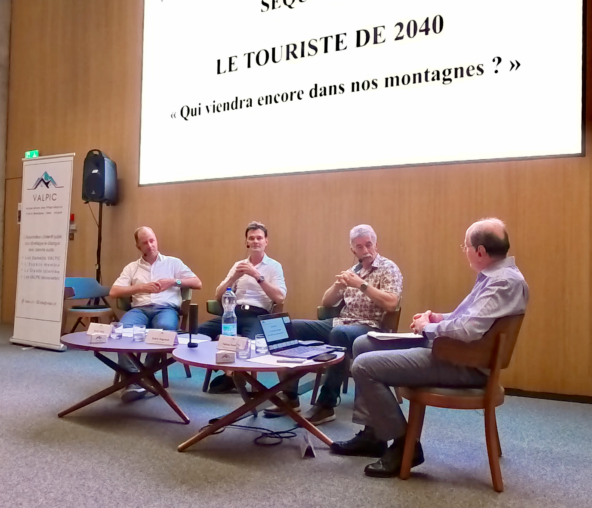
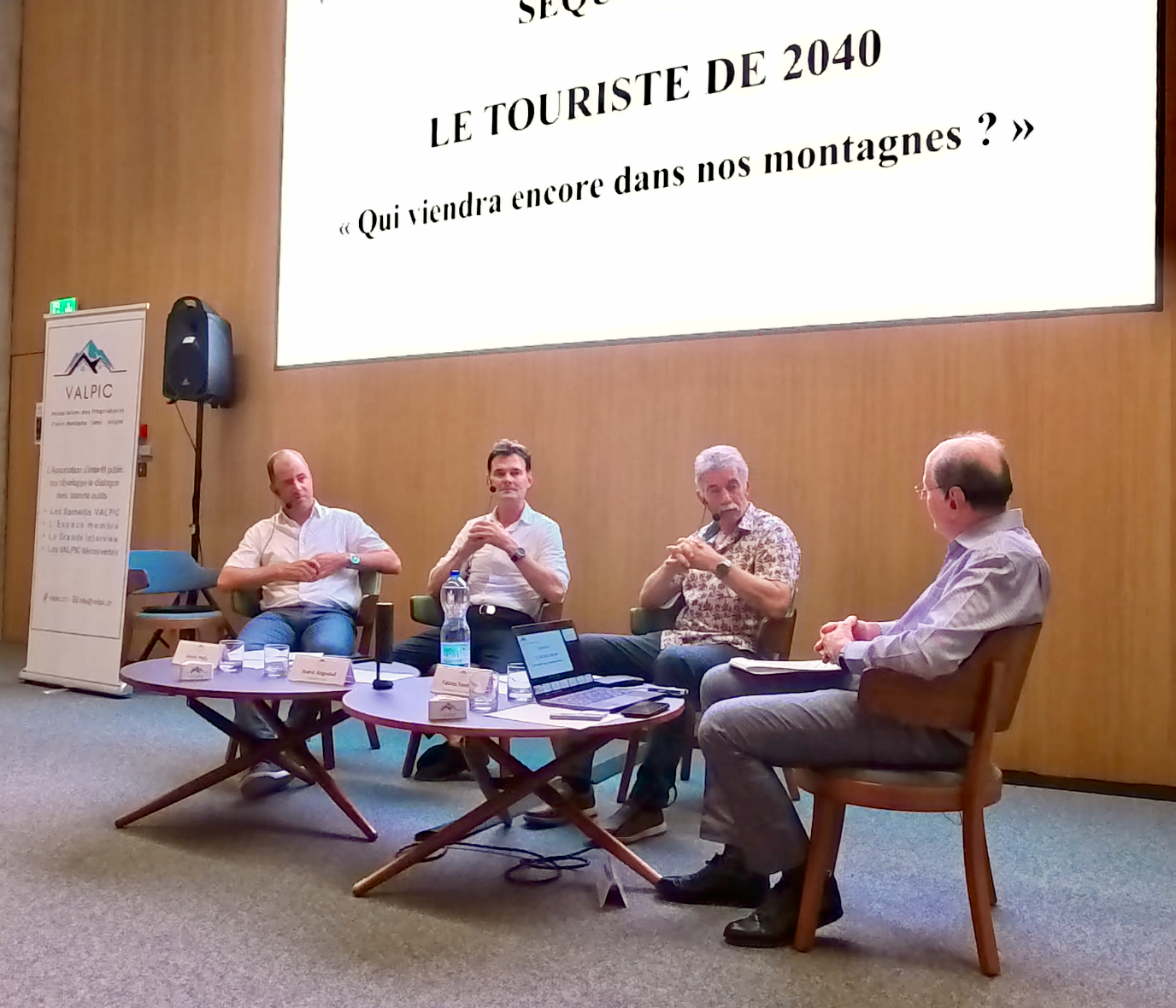
The debate brings togetherthe mayors of the municipalities of Anniviers, Val de Bagnes, and Lens, with the latter participating in the governance of theCrans-Montanadestination. It comparesthree models of Alpine developmentaround a common question:How can we maintain a dynamic tourism economy while preserving communities where residents can continue to live, work, and get involved?
A common thread runs through all the discussions:the search for balance. Elected officials want to improve the quality of what’s on offer, support local businesses, and preserve the appeal of their destinations, but they recognize the challenges related to housing, peak visitor numbers, transportation, and climate change. Tourism success, therefore, is not measured solely in overnight stays or ski days. It is also reflected in the number of children attending school, the vitality of community organizations, and the ability to live close to one’s workplace.
Opinions differ mainly on the future role of skiing.AnniviersandVal de Bagnesview it as an economic driver worth preserving, while also diversifying activities. The representative fromLensplaces greater emphasis onCrans-Montana’salready diversified model and its evolution into a small mountain town that is inhabited and bustling almost year-round.
On water and energy, the speakers advocate forcoordinated management ofresources, storage, and infrastructure. Regarding second homes, they acknowledgethe essential contribution of homeownersto local life, but do not all propose the same level of change in their involvement. The debate does not result in a formalized common platform:it outlines general directions, highlights local initiatives, and leaves several decisions open for further consideration.
The Setting and the Process
The source document for this report is the transcript of the Valpic Grand Plateau recording from July 30, 2026. The audience welcome begins around 00:02:18, the presentation of the topic around 00:04:49, and the conclusion ends around 01:52:18.
The discussion covers, in turn, an overview of the destinations, skiing and the climate, future customer demographics, traditions, water and hydropower, housing, second homes, mobility, and digital technology. A segment featuring reactions to statistical data precedes the final questions.
The host highlights theeconomic importance of tourism in Valais. He mentions approximately 24,000 jobs, including indirect jobs, 15 percent of the canton’s value added, and 3.5 billion francs in annual spending. These figures are used to highlight the importance of the topic; they are presented as data mentioned in the introduction, without statistical validation during the debate.
The tone of the discussions is largely consensual. The moderator, however, brings several points of tension to the attention of the elected officials: growth versus saturation, tourism investments versus the needs of residents, artificial snow versus climate adaptation, the contribution of second-home owners, and the lack of municipal voting rights.
Three Destinations and Three Regional Balances
Time stamp in the recording: 00:09:53 to 00:19:46.
ForAnniviers, the central challenge is to maintain a working-age population in a region comprising several resorts, villages, and hamlets. The president ranks school enrollment as his top indicator. The tourism industry needs workers, but it also needs families capable of settling there long-term. He describes the situation as still favorable, while identifying this demographic continuity as a major political concern.
InVal de Bagnes,a balance must be struck betweenVerbierand the rest of the municipality. The resort contributes significantly to the municipality’s prosperity, but investments directed toward it are not always readily accepted in the other villages. The president emphasizes the need to explain why a destination of international renown requires certain facilities and a high standard of quality. He also notes concerns about overtourism, particularly among some of the younger residents.
The representative fromLensdescribesCrans-Montanaas a small mountain town. According to him, the strong seasonality of the past has diminished: residents and businesses are more present year-round. Tourism is spreading more widely to the villages and vineyards, which is easing the former divide between the upper and lower parts of the municipalities. This movement makes it easier to understand the investments made in the various sectors of the region.
Housing quickly emerges as a common vulnerability. Rising prices are driving residents to leave the resorts for the valley, where this in turn can drive up land prices. The president of Val de Bagnes adds a social indicator: the ability of local organizations to organize events and mobilize volunteers. A prosperous resort lacking a sense of community would lose some of its quality of life.
Skiing in the Face of Climate Change and the Diversification of Activities
Timestamps in the recording: 00:19:46 to 00:26:27 and 01:17:06 to 01:21:47.
The presidentsof AnniviersandVal de Bagnesclearly state thatskiing will remain a key economic driverin the coming decades. ForVal de Bagnes, diversification must not lead to abandoning the activity that madeVerbier attractive in the first place. The president advocates continued investment in facilities and snowmaking, citing the destination’s high-altitude advantages and its clientele’s passion for the sport.
Annivierstakes a similar stance. Its president believes that the negative perception of artificial snow should be put into perspective. He argues that the volumes used represent a small portion of the region’s water resources and that the water eventually returns to the natural environment, albeit with a time lag. This argument reflects his position in the debate; it does not constitute a comprehensive environmental assessment of the facilities.
Crans-Montanais presented asbeing less dependent on skiing. The representative fromLenscites a figure of about 30 percent skiers, though the exact basis for this percentage is not specified. He highlights golf, walking, events, and other reasons for visiting. In the final segment, he emphasizesdiversification, while the other two municipalities continue to prioritize skiing, supplemented by other activities.
The discussion on the World Championships focuses primarily on the usefulness and sustainability of the investments. The representative from Lens contrasts the substantial commitments made in a previous period with the current facilities, which he considers more modest and reusable, particularly the parking lot and the finish stadium. He believes that land-use restrictions now limit the expansion of ski areas. Efforts must therefore focus on improving thequality of existing facilities.
When the moderator presentedprojections showing a decline in snowfall, the representative fromLensacknowledged that skiing will increasingly become a high-altitude activity and that some resorts will be severely vulnerable. The presidentof Anniviersemphasizes the practical timeframe for investments: a facility built to last about twenty years must be evaluated based on the outlook for that period and local conditions. He clarifies that this does not mean ignoring climate change, but rather not prematurely ruling out the local economy’s main industry.
Val de Bagnesdiscusses the reuse of ski lifts for other activities, particularly cycling. Its president points out, however, that multi-season tourism faces its own challenges: conflicts between cyclists and pedestrians, space management, and the limitations of continuous activities. Extending the season remains a goal, though it is not presented as an automatic solution to all the challenges facing the ski industry.
Future Customer Segments and New Ways of Living in the Mountains
Time stamp in the recording: 00:26:27 to 00:35:50.
When asked aboutvisitors in 2040, elected officialsdid not describea single type of visitor. Swiss families, athletes, international visitors, second-home owners, remote workers, and temporary residents must all be able to coexist. The presidentof Anniviershopes to diversify the visitor base in order to spread out visitor numbers more evenly, rather than simply increasing peak periods.
ForVal de Bagnes, 2040 is a relatively near-term horizon. The president anticipates a continuation of the area’s appeal rather than a sudden shift, provided that the quality of the offerings is maintained and improved. The representative fromLenssees COVID as a more significant turning point: homeowners have discovered the quality of life in the mountains outside of vacation season, extended their stays, relocated their work, or chosen to make it their primary residence.
The president ofAnniviersoffers a more nuanced perspective on this interpretation. The trend of second-home ownership already existed, particularly at certain stages of one’s professional life or upon retirement. He acknowledges that the trend has accelerated due to the pandemic but questions whether it will persist. He also mentions a perception that the number of days of occupancy is increasing, though he notes that he does not have exact statistics on this point.
The desire for cool weather, sunshine, walks, and a break from city life enhances the appeal of these destinations. Elected officials point out, however, that events and services also matter: people don’t come just to escape the heat. InVal de Bagnes,the area’s appeal as a place to live must also be weighed against natural hazards and the region’s capacity to accommodate new residents.
The proposed development remains within set limits. The president ofVal de Bagneslater mentioned plans for an increase of approximately 2,500 residents over fifteen years, based on a reported population of about 11,000. He explicitly rejects the idea that improved transportation links would lead to a doubling or tripling of the population.
Traditions and Local Life as Components of Tourism
Time stamp in the recording: 00:35:50 to 00:43:20.
Cowfighting, alpine pastures, and village festivals serve as a starting point for the discussion on Valaisan identity. The president ofVal de Bagnes, who is also introduced as president of the Swiss Federation for the Breeding of the Hérens Cattle Breed, emphasizes howdeeply rooted these practices are. His priority is preserving the breed and the people who keep this tradition alive, before it is turned into a tourist attraction.
The presidentof Anniviersbelieves that promoting tourism is legitimate as long as it remains rooted in actual practice. He emphasizes the role of municipalities in supporting farmers and village associations. Authenticity restson the presence of people, institutions, and living traditions, rather than on activities staged for visitors.
The representative fromLensbelieves that Valais could do a better job of promoting its culture. He cites the ability of other regions—notably the Camargue—to make their traditions widely recognizable. In his view, more assertive promotion can draw visitors from the resorts to the villages while preserving the roots of these events.
Val de Bagnesillustrates the importance of livestock to a festival’s appeal: the cancellation of the parade for health reasons would have significantly reduced attendance. The festival’s president also mentions the possibility of holding bullfights in the summer in an alpine pasture setting, which would be more accessible to tourists. He emphasizes the need to explain the practice, rather than simply putting on a show.
The topic ofvolunteerismruns throughout this segment. Traditional organizations do not always have the necessary human resources to organize large events on their own. Cooperation with municipalities and tourism bureaus is presented as a useful solution, provided that the traditional stakeholders remain at the heart of the project.
Water and Hydropower in the Regional Strategy
Timestamps in the recording: 00:43:20 to 00:54:58 and 01:21:47 to 01:32:15.
Water is viewed as both a prerequisite for local life, an agricultural resource, a foundation for tourism, a source of electricity, and a risk factor. The presidentof Annivierspoints out that high water levels and flooding can cause significant damage. Water management is therefore not limited to revenue from dams; it influences all regional decisions.
The president ofVal de Bagnesoutlines ahierarchy of water uses, placing water for human consumption first, followed by the needs of livestock, agriculture, and the landscape, before mentioning electricity. He calls for a collective discussion that goes beyond the interests of individual municipalities, particularly in light of the expiring hydroelectric concessions.
Theneed for water storage is a central concern.Speakers mentioned melting glaciers, erratic rainfall, and the need to conserve part of the water supply for later use. The representative fromLensex explainstheHaut-Plateau’sdependence on purchasing water from a dam: according to him, these purchases now begin earlier in the summer. He describes an intermunicipal project aimed at collecting meltwater, storing it, and then releasing it as needed.
Elected officials express regret over the slow progress of projectsinvolving pipelines, reservoirs, and dam heightening. They cite bureaucratic procedures, opposition, and the complexity of concession agreements. Anniviersalso highlights the issue of funding: according to its president, energy prices that are considered too low limit the funds available for investment.
There are many connections to tourism. Reservoir lakes are already popular tourist destinations; a reservoir can also serve several purposes, including irrigation and recreational activities. The presidentof Anniviersadvocates for this approach of seeking complementary uses rather than a perspective that systematically pits tourism against water conservation.
The presenter’s presentation of figures raises some important nuances. The presidentof Anniviers mentionsa possible decrease in inflows to the dams and suggests different usage rates than those shown in the table. The transcript does not allow for the reconstruction of a consistent set of figures. The key point that emerges is the need to consider local and seasonal availability, as well as options for sharing and storage.
Regarding hydroelectric revenue, the moderator raises the possibility of using it to fund transportation, housing for seasonal workers, or tourism development.Annivierspoints out that the power generation and its revenue already exist and benefit companies whose owners include public entities. It is therefore not entirely a new source of revenue to be allocated. The president also distinguishes between an annual balance between production and consumption and true self-sufficiency at all times, which requires cooperation and mutual support.
Housing for Residents and Workers
Time stamp in the recording: 00:54:58 to 01:00:54.
The moderator raises the question of thesustainability of a destinationwhere those who work there can no longer live. The responses highlight atensionbetween the heritage value of properties, tourism demand, and the need for permanent housing. None of the panelists suggests that any single measure is sufficient.
The presidentof Annivierscriticizes theeffects of the legislation on second homes, which he believes has not solved the problem of rising prices. He cites the land-use plan and restrictions in certain areas as municipal tools that could limit speculation, while acknowledging that they are difficult to implement.
The representative fromLensplaces the housing crisis within abroader Swiss context. He sees solutions in increasing the density of villages and creating rental housing, often outside the centers of resort towns. He mentions the commitment of local community leaders and two projects, announced to include approximately 80 and 20 apartments, respectively. He believes the situation remains manageable in his district, even if it calls for concrete action.
InVal de Bagnes,the president highlights thecreation of a housing foundation, the acquisition of land, and the potential conversion of municipal buildings to provide affordable housing. He also encourages local property owners to seek collective solutions for repurposing their properties, rather than selling them and then losing control over them in the market.
Finally, he emphasizes theresponsibility of employers.Some establishments, he explains, have stopped using the rooms that were once reserved for staff, and then turn to the municipality to resolve housing difficulties. The solution must therefore involve local governments, property owners, investors, and tourism businesses. Moving housing to the valley also entails additional travel and directly links this issue to that of mobility.
Second-home owners and participation in public life
Timestamps in the recording: 01:00:54 to 01:07:49 and 01:32:15 to 01:40:05.
The three elected officials acknowledge the significant role played by second-home owners.Anniviersdescribes them as a particularly important and loyal clientele. The representative fromLensviews them asactive participants in local life and advocates for the destination, who may eventually become permanent residents.Val de Bagnes highlightsthe connections maintained during the COVID-19 pandemic, particularly through vouchers for local businesses.
The host highlights the discrepancy between this contribution and the lack of voting rights in the municipality where the second home is located. He questions therole of homeowners’ associationsand their access to tourism bodies. Elected officials highlight general meetings, regular dialogue, and participationin development corporations or local events.
Anniviersconsiders the existing measures to be useful and sees no immediate need to add new structures.Val de Bagnesdescribes a satisfactory collaboration with the homeowners’ association. The representative fromLens more clearly acknowledges room for improvement incommunication and in the integration of these representatives into committees and associations.
Generational transition is another source of uncertainty. The president ofVal de Bagnesraises questions about the transfer of homes and attachment to the area: descendants do not always keep family properties, and high prices limit young households’ access to second homes. The continuity of current relationships cannot therefore be taken for granted.
The discussion broadens to includethe decline in collective engagement,which also affects primary residents. The presidentof Anniviershighlights the difficulties in mobilizing people within local communities and political parties. The moderator observes that public dialogue initiatives also interest permanent residents.The challenge now is to foster more active participationin community life, regardless of residency status.
Finally,Val de Bagneshighlights the concerns of property owners regarding overcrowding on the slopes, particularly due to day-trippers. This issue calls for dialogue with the private operator of the ski lifts and a search for a balance between visitor numbers, economic activity, and the quality of the experience.
Mobility and the specific limitations of each valley
Timestamps in the recording: 01:07:49 to 01:13:44 and 01:40:05 to 01:42:41.
Responses regarding private cars depend heavily on geography. InAnniviers, the president believes that private cars will remain necessary to serve scattered villages and hamlets. Cable-based solutions have been studied, but he does not consider them competitive in this setting, and they would not eliminate the need for last-mile service. He cites improvements to vehicles and traffic flow as potential future avenues.
Val de Bagnesis served by arail lineto Le Châble, extended by acable car connectiontoVerbier, as well as by buses within the resort. The resort’s president sees this as a major advantage, while acknowledging that residents of other villages often remain dependent on their cars. He highlights the use of public transportation by young people and mentions a partnership with Martigny to facilitate car-free access.
InCrans-Montana, the representative fromLensnoted the presence ofseveral road access points, thefunicular, andbuses. He emphasized the improvements made to service offerings and frequency in recent years. Shuttle buses and free services for passengers are cited as improvements, though the moderator notes that they nevertheless come at a cost to local governments.
The goalpresented by the moderator—to increase the modal share from 5% to 15% by 2040—has raisedconcerns about its feasibilityin mountainous areas. The specific type of travel covered remains unclear in the transcript, which uses the term “soft mobility” while discussing public transportation at length. Elected officials acknowledge an increase in usage but do not provide a quantified trajectory to ensure this goal is met.
Traffic congestion could encourage more visitors to take the train and use public transportation. However, this shift requires a convenient transportation system tailored to the destinations. The debate does not conclude that cars should be eliminated altogether, nor does it suggest that increasing transportation capacity would justify unlimited growth in visitor numbers.
Digital Technology and the Reliability of Indicators
Timestamps in the recording: 01:13:44 to 01:17:06 and 01:42:41 to 01:46:24.
Artificial intelligence isviewed as a tool for promotion, providing information to visitors, and managing visitor flows.Annivierscites destination searches and responses to vacationers. The representative fromLensmentionsmanaging transportation peaks.Val de Bagnesemphasizes thequality of the information providedby hotels, restaurants, and other service providers: the information must be accurate to be properly incorporated into new search methods.
The president ofVal de Bagnesbelieves that this development could lead toa reevaluation of certain digital budgets.The moderator then raised the issue ofownership of tourism dataand whether it is controlled by local authorities or platforms. The representative fromLensexpressed skepticism about the ability to prevent platforms from accessing this data. No concrete datagovernancemeasures have been finalized.
Thediscussion on overnight staysreveals a more immediate challenge: the figures being compared do not necessarily cover the same categories. Hotels, other types of lodging, international schools, and overnight stays calculated based on vacation home packages cannot be treated as equivalent without specifying the scope of each category. Several of the figures presented were disputed during the discussion.
Another presentation addressed the challenges of collecting and maintaining the confidentiality of hotel statistics, as well as the calculation rules applicable to second homes. The debate therefore leaves open the question of quantitative comparisons between destinations. Above all, it highlights theneed for common definitions andunderstandable data before drawing conclusions about their respective performance.
The officiating calls in the final sequence
Time stamp in the recording: 01:46:24 to 01:52:18.
When asked to choose between more visitors and longer stays, the presidents favorlonger stays.Annivierspoints out, however, that the current trend does not naturally move in that direction. No set of measures has been developed to reverse this trend.
When it comes to skiing and diversification, the differences already mentioned resurface:Anniviers and Val de Bagnescontinueto prioritize skiing,while Crans-Montana is taking a more diversified approach. The discussions show that these priorities are not viewed as mutually exclusive.
The choice between a ski lift and public transportation is resolved by the possibility of combining the two functions. Similarly, the contrast between a major international event and local events primarily serves to highlight their complementary nature:major events provide valuable visibility for Valais, while regular events bring destinations to life.
Regarding lodging, there is aneed foradditionalhotels, particularly inVal de Bagnes.Its president, however, highlights the difficulty of finding investors for projects focused solely on hotels and mentions developments that combine hotels and hotel apartments. Annivierscalls for banks to take a less cautious approach toward tourism. Theissue of financingtherefore remains central.
Finally, the landscape is cited as a major asset by representatives fromVal de BagnesandLens, while the presidentof Anniviershighlights freedom. The moderator concluded by emphasizing theneed to pass on attractive, vibrant, and authentic regions—ones capable of welcoming visitors without becoming overcrowded and of attracting investment while preserving their character.
Points of Convergence and Unresolved Issues
The main agreement concerns thepurpose of development:the tourism industry must support vibrant communities. This approach is reflected in a commitment to maintaining the quality of tourism offerings, ensuring the presence of families, providing housing for workers, preserving traditions, and spreading tourism activity more evenly throughout the year. Second-home owners are recognized as important partners; water and transportation require cooperation that extends beyond municipal boundaries.
The differences mainly concern resources and priorities. The importance of skiing, the potential for reducing dependence on cars, and the need to adapt participation mechanisms vary from region to region. The debate thus highlights the limitations of a one-size-fits-all model applicable to all resorts in Valais.
Several decisions still need to be made:
- How much should you invest in skiing, depending on the location and climate conditions?;
- how to allocate housing costs between municipalities and employers;
- how to manage spikes in visitor numbers without jeopardizing business operations;
- how to speed up water projects;
- and how to better involve second-home owners and younger generations in local life.
No collective decision, joint budget, or operational deadline has been announced. The initiatives mentioned are part of local efforts or policy directions. The purpose of the panel discussion was therefore to provide context for the challenges and the proposed responses, rather than to present a roadmap adopted by the three municipalities.
All in all, it was a fruitful exchange of differing perspectives on how to approach a common topic.
Participants in the Valpic Grand Plateau debate on July 30, 2026:
- Fabien Sauthier, mayor of Val-de-Bagnes.
- David Bagnoud, mayor of the municipality of Lens (Crans-Montana).
- David Melly, mayor of the municipality of Anniviers.
Moderator: Jean Metz, president of Valpic.
Transcription and summary produced with the assistance of AI systems.