
 Written by
 Valpic Discovery – July 4, 2026 –
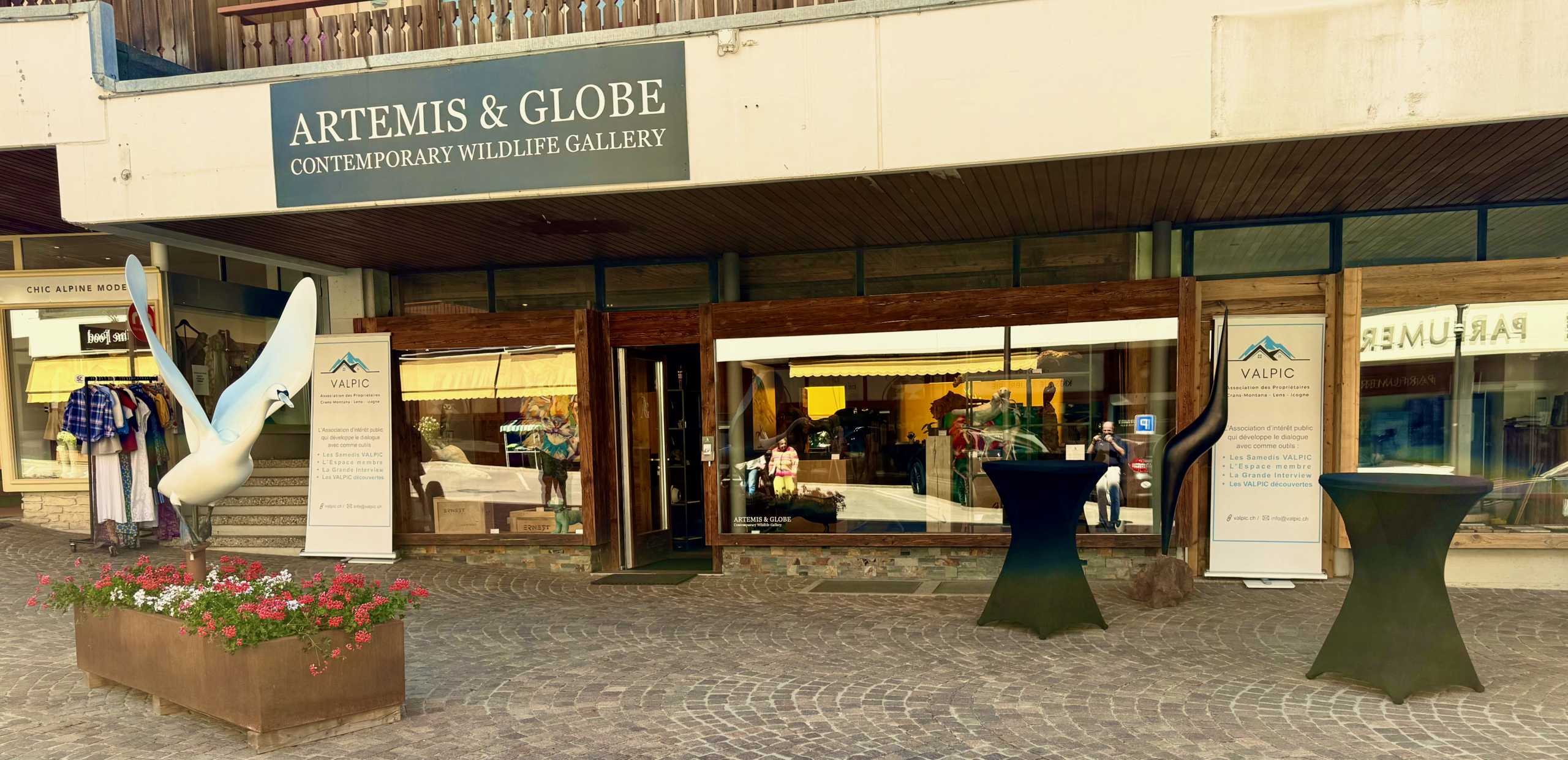
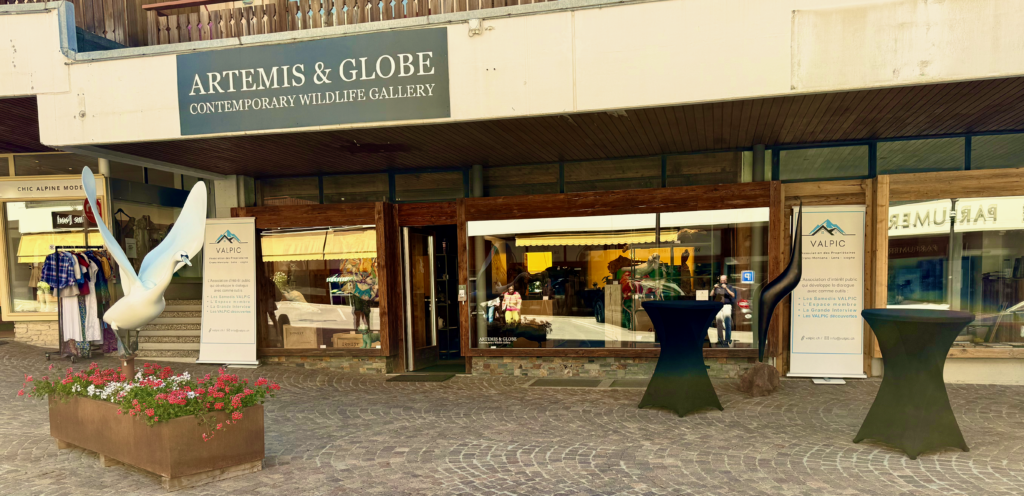
Artémis & Globe Gallery – 10 Rue du Grand Place – Crans
Valpic Discovery – July 4, 2026 –
Opening Reception and Discussion with gallery owners Thierry Ote and Isabelle Rouma and artists Marc Dedrie,
, Lise Vurpillot, and Pierre Yermia
VALPIC Discovery • July 4, 2026 • Artémis & Globe Gallery, Crans-Montana
This event showcased the work of three artists exhibiting at the Artémis & Globe Gallery. Gallery owners Thierry Ote and Isabelle Rouma led the discussions—both in person and remotely—before a large audience. The evening concluded with a cocktail reception hosted by the gallery.
Three Artists, Three Perspectives on Nature
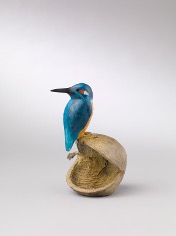
- Marc Dedrie mainly sculpts birds in bronze. He is known for his colorful patinas.
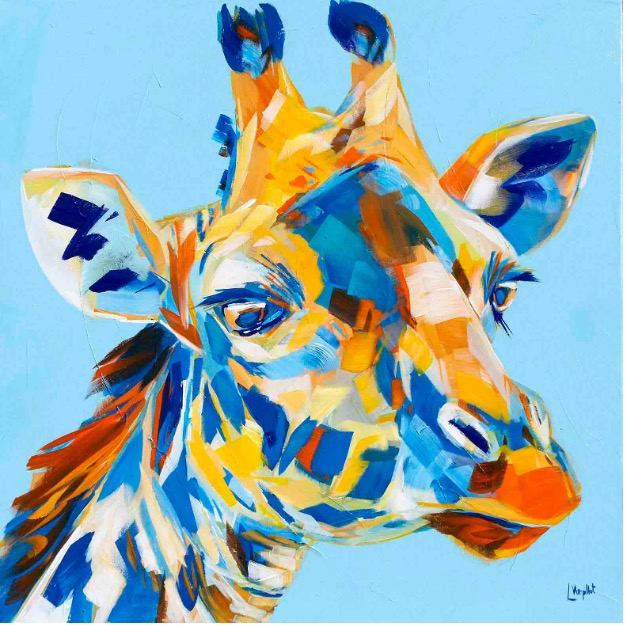
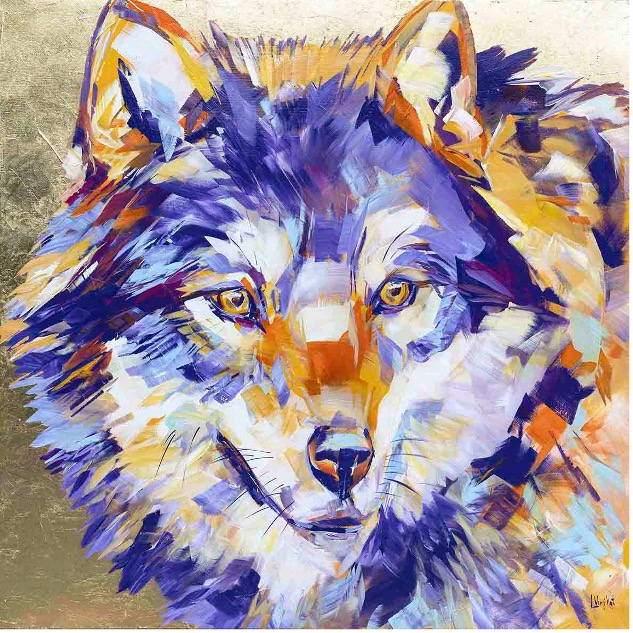
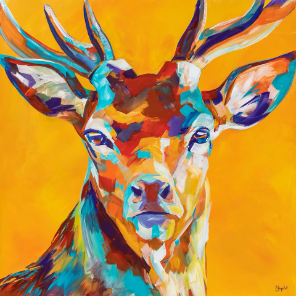
- Lise Vurpillot paints animals. She seeks to capture their personalities and presence.
- Pierre Yermia creates bronze sculptures, often slender or monumental. His work combines strength, grace, and balance.
Although their techniques differ, the three artists share a common interest: nature and the animal world. Their works seek to evoke emotion and create a lasting connection with the audience.
Marc Dedrie: Capturing the Spirit of the Bird
Observe before sculpting
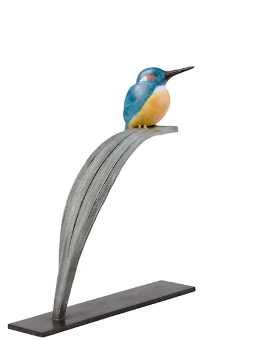
Marc Dedrie sculpts birds he has observed in the wild. For each sculpture, he chooses a pose that expresses the animal’s character. He places great emphasis on movement and lines. In a hummingbird sculpture, for example, the bird’s beak extends the line of the leaf.
Patina: A Personal Signature
Polishing and patina are two different techniques. Patina is created using heat: the bronze is heated, and then several substances are applied to its surface. These substances react with the metal and with each other. The result depends on experience, time, and the number of layers.
Marc Dedrie uses colorful, marbled patinas. Some of his works almost look like stone. This technique has become one of the hallmarks of his work.
Artworks Connected to Their Environment
The discussion also touched on his presence in various galleries, particularly in Antwerp and Crans-Montana. For the artist, the personal relationship with gallery owners is essential. His sculptures naturally find their place in an Alpine resort, surrounded by the mountains and the landscape.
Lise Vurpillot: Revealing Animals’ Personalities
From Sketch to Large Format
Lise Vurpillot began by painting very colorful portraits. She then turned her attention to animals from here and abroad. She spends a long time observing them in parks, zoos, or while traveling, particularly in Kenya. She begins by making sketches on site, then develops her subjects into large-format works.
A Sensitive Painting
Her goal is not simply to reproduce an animal. She wants to convey its presence, its gaze, and its personality. Her work also invites the public to reflect on the place of animals and the protection of nature.
A technique tailored to each situation
Depending on the location, drying time, and workshop conditions, she adapts her products and dilutions. In particular, she may use an emulsion, turpentine, or various essential oils.
Pierre Yermia: Between Earth and Heaven
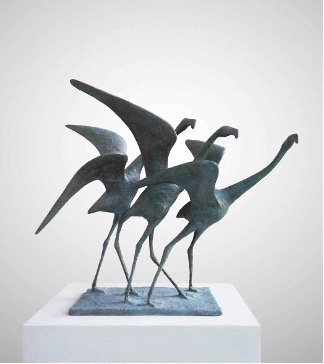
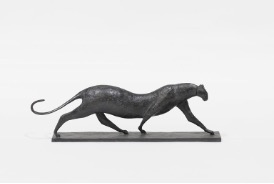
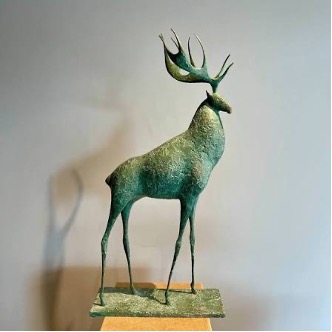
Grace, Strength, and Balance
Pierre Yermia seeks elegant, lightweight forms. His figures and animals seem both firmly rooted to the ground and drawn toward the sky. The proportions are often elongated, with a deliberately small head. This transformation gives the sculptures a strong presence in space.
Drawing as a Starting Point
Drawing is essential to his creative process. He often begins with small-scale works, moves on to plaster, and then casts the piece in bronze. For him, a sculpture emerges gradually, like a birth. It takes shape and matures over time.
Subdued colors and a collaborative effort
His patinas primarily feature greens, blues, blacks, and grays. The colors are chosen based on whether the work will be installed indoors or outdoors. Pierre Yermia works with patinators to find the finish that best showcases the sculpture.
Numerous influences
His work draws inspiration from various periods in art history: ancient sculpture, Brancusi, Giacometti, and the paintings of El Greco, among others. He does not copy these artists; rather, he incorporates their artistic explorations to develop his own artistic language.
Monumental Sculpture in Public Spaces
For Pierre Yermia, a monumental work is not simply a larger sculpture. It must engage with the landscape or the city. When placed in a public space, it can guide visitors along a path and transform the way the public perceives a place.
Key Takeaways from the Meeting
- Observe nature with care and respect.
- Give the depicted animal a sense of presence and personality.
- Adapt the techniques and colors to each artwork.
- Reflecting on the artwork’s place in the gallery, the landscape, or public space.
- To create works that stand the test of time and are passed down from one generation to the next.
- Meet the artists and explore their studios to gain a better understanding of their creative worlds.
A Few Words to Remember
“Sculpture is like a bridge between Earth and Heaven.”
“I’m looking for a pose that truly captures the spirit of the animal.”
“Patina is a matter of experience: there are no certainties, but there is time and practice.”
“Drawing is an essential first manifestation: sculpture is always rooted in drawing.”
“A monumental sculpture truly comes into its own when it can breathe within its surroundings.”